 Image 1 of 1
Various Sizes - Matted Prints
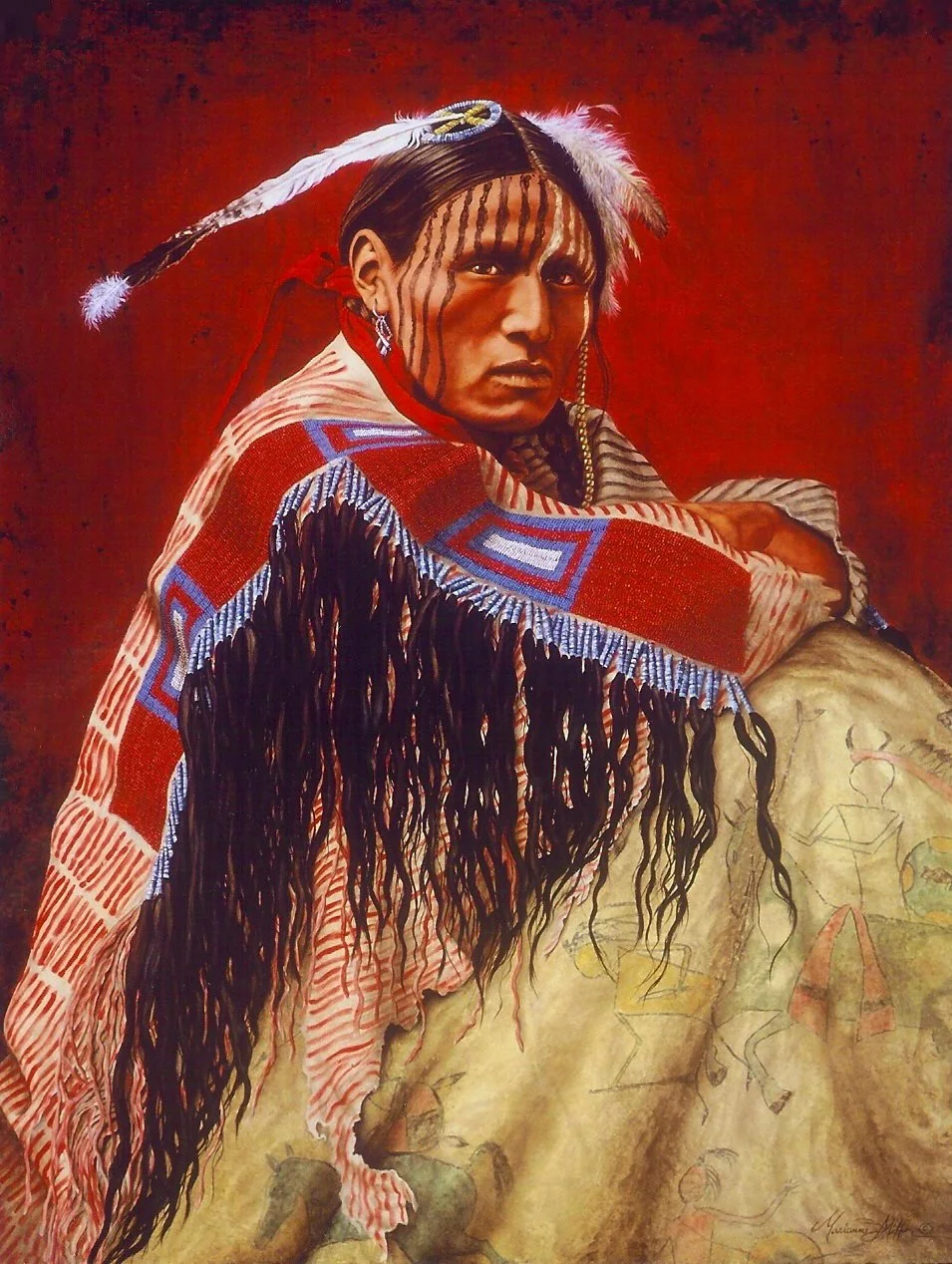
White Belly, a young Sioux warrior in the late 1800's, was from the Lakota or Western Sioux tribe. Leaning on a buffalo robe covered with pictographs that show various scenes of heroic exploits, White Belly wears one of the most prized possessions of the Plains warrior - the war shirt.
Among the Lakota, owning a painted scalp shirt was a high honor. Made from deer skin, such a shirt would be tanned, fashioned, and decorated with quillwork or beadwork by a prominent woman in the warrior's life, usually his wife. Then the owner himself would decorate the shirt as well with paintings and drawings of various symbols. Each of the individual scalp locks hanging from the arms and back, represented a coup, or honor, won in battle. When these scalp locks are hung together on a shirt, the garment symbolizes the brave deeds of all Lakota warriors, and honors all of the people that the warrior protects. On this specific shirt, the owner has made a series of vertical stripes using two strong colors, red and black. These colors are sacred in traditional Lakota belief. The color red is especially powerful as it symbolizes blood - the life force in all living creatures. Black, on the other hand, was commonly used to symbolize victory.
It was said that to own this type of sacred garment one must be compassionate, generous, brave, and wise. Indeed, when a warrior was dressed in his shirt, he embodied a level of beauty, achievement, and ability that inspired others to emulate him.
Click on Photo to view Full Image
Various Sizes - Matted Prints
White Belly, a young Sioux warrior in the late 1800's, was from the Lakota or Western Sioux tribe. Leaning on a buffalo robe covered with pictographs that show various scenes of heroic exploits, White Belly wears one of the most prized possessions of the Plains warrior - the war shirt.
Among the Lakota, owning a painted scalp shirt was a high honor. Made from deer skin, such a shirt would be tanned, fashioned, and decorated with quillwork or beadwork by a prominent woman in the warrior's life, usually his wife. Then the owner himself would decorate the shirt as well with paintings and drawings of various symbols. Each of the individual scalp locks hanging from the arms and back, represented a coup, or honor, won in battle. When these scalp locks are hung together on a shirt, the garment symbolizes the brave deeds of all Lakota warriors, and honors all of the people that the warrior protects. On this specific shirt, the owner has made a series of vertical stripes using two strong colors, red and black. These colors are sacred in traditional Lakota belief. The color red is especially powerful as it symbolizes blood - the life force in all living creatures. Black, on the other hand, was commonly used to symbolize victory.
It was said that to own this type of sacred garment one must be compassionate, generous, brave, and wise. Indeed, when a warrior was dressed in his shirt, he embodied a level of beauty, achievement, and ability that inspired others to emulate him.
Click on Photo to view Full Image