 Image 1 of 1
Various Sizes - Matted Prints
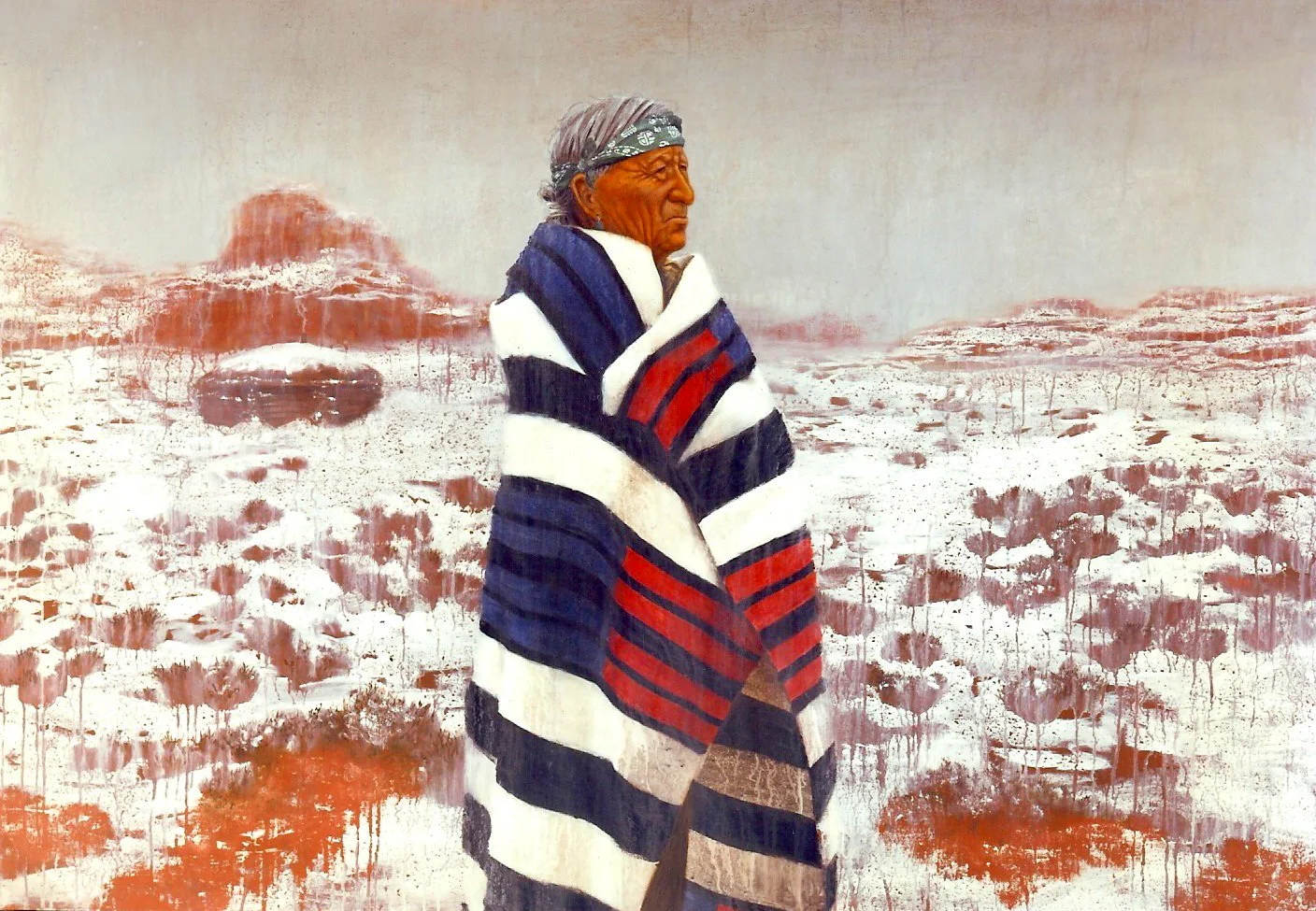
In traditional Navajo stories, the “Season when the Thunder Sleeps” refers to Winter and Spring when there are no thunderstorms. It is during this time that the Navajo believe it is safe to speak of dangerous spirits. This means that the “Season when Thunder Sleeps” is the only time that certain teachings, healings, and ceremonials can occur, because to participate in these events at other times would be dangerous and inappropriate.
The Navajo are known for their beautiful weavings and one of the most iconic weavings in American history are the Navajo Chief Blankets. A distinguished status symbol during the 19th century Chief’s blankets were traded and prized throughout the Southwest and Great Plains. These gorgeous weavings were not only valued for their horizontal stripes of rich Cochineal reds, Indigo blues and deep blacks, but because of their supreme quality. Often worn across the shoulders of a Chief, clan leader or men and women of prominent social or financial status, these Navajo wearing blankets were tightly woven to shed water and to keep you safe and warm during cold, rainy and snowy seasons.
The winter background of a snow scene on the Navajo reservation, shows the conditions of the high desert of New Mexico and Arizona. Nestled in the back is a hogan, the sacred home for the Diné (Navajo) people who practice traditional religion. Every family, even if they live most of the time in a newer home — must have the traditional hogan for ceremonials, and to keep themselves in balance. Traditionally the Navajos make their hogans of wooden poles, tree bark and mud. The doorway of each hogan opened to the east so they could get the morning sun as well as good blessings.
Click on Photo to view Full Image
Various Sizes - Matted Prints
In traditional Navajo stories, the “Season when the Thunder Sleeps” refers to Winter and Spring when there are no thunderstorms. It is during this time that the Navajo believe it is safe to speak of dangerous spirits. This means that the “Season when Thunder Sleeps” is the only time that certain teachings, healings, and ceremonials can occur, because to participate in these events at other times would be dangerous and inappropriate.
The Navajo are known for their beautiful weavings and one of the most iconic weavings in American history are the Navajo Chief Blankets. A distinguished status symbol during the 19th century Chief’s blankets were traded and prized throughout the Southwest and Great Plains. These gorgeous weavings were not only valued for their horizontal stripes of rich Cochineal reds, Indigo blues and deep blacks, but because of their supreme quality. Often worn across the shoulders of a Chief, clan leader or men and women of prominent social or financial status, these Navajo wearing blankets were tightly woven to shed water and to keep you safe and warm during cold, rainy and snowy seasons.
The winter background of a snow scene on the Navajo reservation, shows the conditions of the high desert of New Mexico and Arizona. Nestled in the back is a hogan, the sacred home for the Diné (Navajo) people who practice traditional religion. Every family, even if they live most of the time in a newer home — must have the traditional hogan for ceremonials, and to keep themselves in balance. Traditionally the Navajos make their hogans of wooden poles, tree bark and mud. The doorway of each hogan opened to the east so they could get the morning sun as well as good blessings.
Click on Photo to view Full Image