 Image 1 of 1
Various Sizes - Matted Prints
Once the largest of the tribes of the northern and western Plains, the Blackfoot Confederacy consisted of three bands, the Blackfeet proper (Siksika), the Piegan (or Pikuni), and the Blood (Kainah). These nomadic buffalo hunters roamed the high plains from the upper Missouri River in Montana to the province of Alberta, Canada. The exact origin of the name Blackfoot is not known although the most common belief is that it comes from a Cree term that referred to their custom of painting their moccasins black.
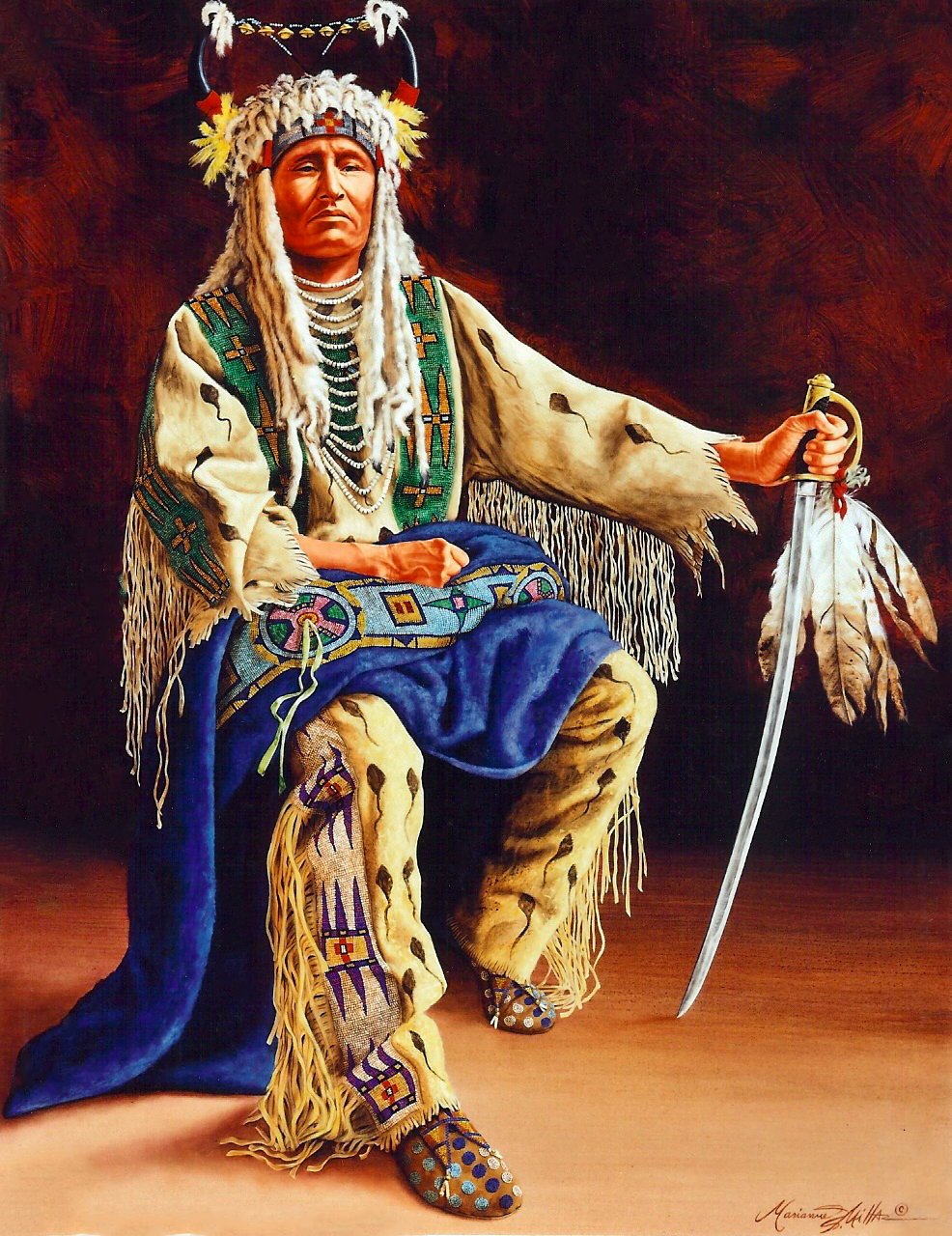
This Blackfoot warrior from the late 1800's, is dressed in tanned buckskin war shirt and leggings decorated with strips of glass beadwork and trimmed with extremely long, narrow fringes. Held out like a trophy in his hand is a Civil War era sabre either taken from an enemy in battle or received as a gift. Decorated with eagle feathers and a sweetgrass bundle, it is now part of this warrior's dance and ceremonial paraphernalia.
Crowning this beautiful outfit is the split-horn bonnet. A well-known traditional headdress from the plains tribes, this split-horn bonnet is covered in ermine or white weasel strips. Such a bonnet's primary function would be ceremonial although it could be worn in warfare. It is, by itself, considered a bundle (talisman that manifests a higher power) and was therefore transferable only with proper songs, facial paintings, smudging, and would cost the transferee many horses.
Click on Photo to view Full Image
Various Sizes - Matted Prints
Once the largest of the tribes of the northern and western Plains, the Blackfoot Confederacy consisted of three bands, the Blackfeet proper (Siksika), the Piegan (or Pikuni), and the Blood (Kainah). These nomadic buffalo hunters roamed the high plains from the upper Missouri River in Montana to the province of Alberta, Canada. The exact origin of the name Blackfoot is not known although the most common belief is that it comes from a Cree term that referred to their custom of painting their moccasins black.
This Blackfoot warrior from the late 1800's, is dressed in tanned buckskin war shirt and leggings decorated with strips of glass beadwork and trimmed with extremely long, narrow fringes. Held out like a trophy in his hand is a Civil War era sabre either taken from an enemy in battle or received as a gift. Decorated with eagle feathers and a sweetgrass bundle, it is now part of this warrior's dance and ceremonial paraphernalia.
Crowning this beautiful outfit is the split-horn bonnet. A well-known traditional headdress from the plains tribes, this split-horn bonnet is covered in ermine or white weasel strips. Such a bonnet's primary function would be ceremonial although it could be worn in warfare. It is, by itself, considered a bundle (talisman that manifests a higher power) and was therefore transferable only with proper songs, facial paintings, smudging, and would cost the transferee many horses.
Click on Photo to view Full Image