 Image 1 of 1
Various Sizes - Matted Prints
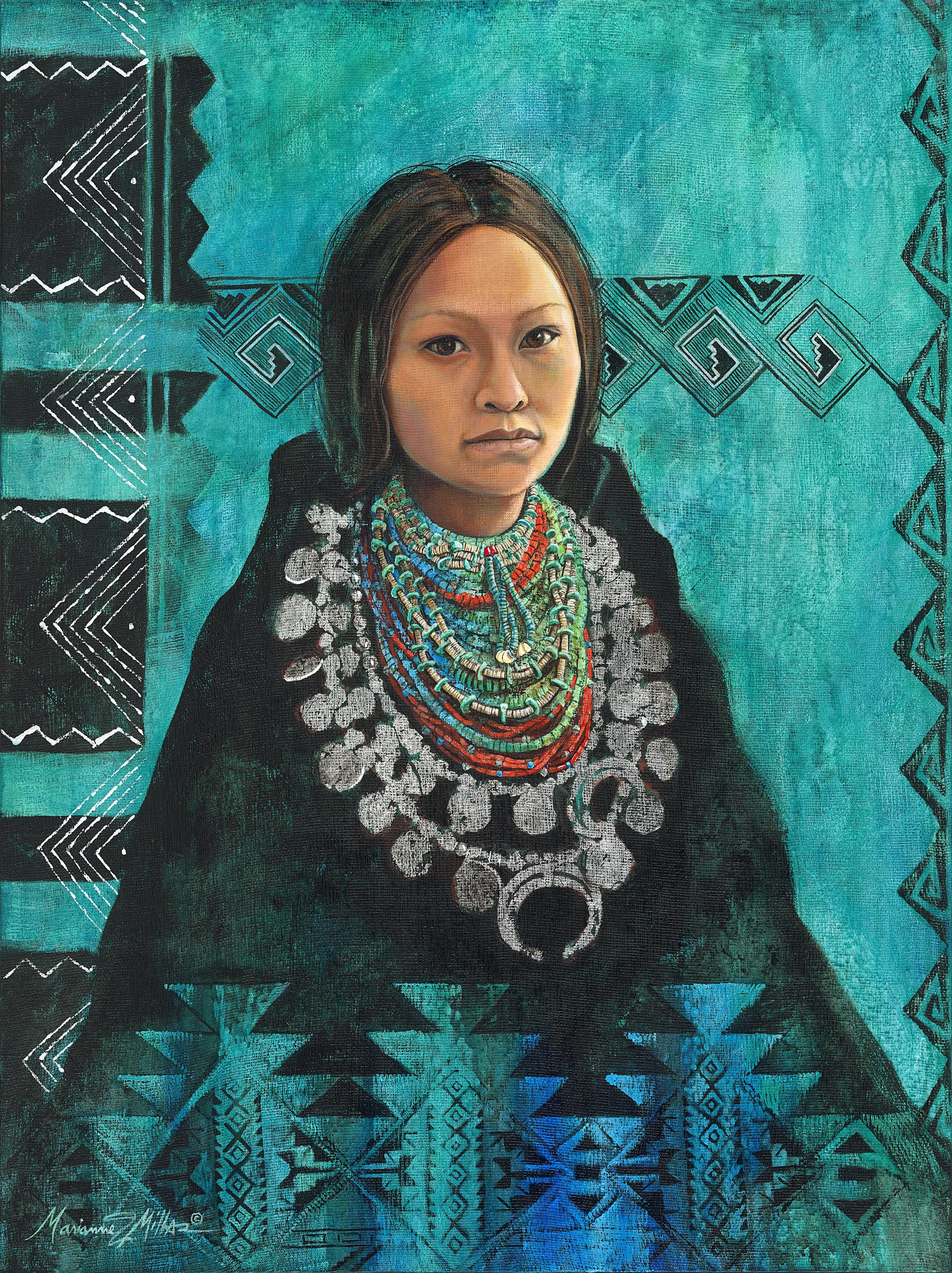
The craft of jewelry making has been constant in Pueblo life for thousands of years using turquoise, marine shell, jet, and local stone. The use of coral and silver are relative newcomers, being introduced to native culture by the Europeans. For hundreds of years the high esteem for coral by the Puebloans has been second only to that of the beautiful blue-green stone called turquoise. Some Native Americans believe the gem was a gift from the spirits and call it the Sky Stone. Today, turquoise is one of the most iconic representations of the Southwest and is still revered among Native American jewelry artists and collectors a like.
By the mid-19th century, Zuni and Navajo artisans learned metalsmithing. For the Pueblo people, necklaces made from silver coins or “squash blossom” bells as well as “heaps” of bead necklaces would show the wearer’s wealth and prestige.
The traditional garment worn by many Puebloan woman was the basic black woven dress or manta which would also be used as a blanket. Again, influenced by European contact, these basic black outfits started to be embellished with beautiful broad borders of embroidery, more than likely in red and green yarn. The embroidery motifs used along the bottom and sides of this painting echo the traditional embroidery of the Puebloans who used the highly stylized and geometric symbols to refer to rain, clouds, lightning, rainbows and other earth symbols. For the Pueblo people who live in the dry and arid southwest, these symbols often represented the wishes and prayers of the people for rain and snow, a vital blessing.
Click on Photo to view Full Image
Various Sizes - Matted Prints
The craft of jewelry making has been constant in Pueblo life for thousands of years using turquoise, marine shell, jet, and local stone. The use of coral and silver are relative newcomers, being introduced to native culture by the Europeans. For hundreds of years the high esteem for coral by the Puebloans has been second only to that of the beautiful blue-green stone called turquoise. Some Native Americans believe the gem was a gift from the spirits and call it the Sky Stone. Today, turquoise is one of the most iconic representations of the Southwest and is still revered among Native American jewelry artists and collectors a like.
By the mid-19th century, Zuni and Navajo artisans learned metalsmithing. For the Pueblo people, necklaces made from silver coins or “squash blossom” bells as well as “heaps” of bead necklaces would show the wearer’s wealth and prestige.
The traditional garment worn by many Puebloan woman was the basic black woven dress or manta which would also be used as a blanket. Again, influenced by European contact, these basic black outfits started to be embellished with beautiful broad borders of embroidery, more than likely in red and green yarn. The embroidery motifs used along the bottom and sides of this painting echo the traditional embroidery of the Puebloans who used the highly stylized and geometric symbols to refer to rain, clouds, lightning, rainbows and other earth symbols. For the Pueblo people who live in the dry and arid southwest, these symbols often represented the wishes and prayers of the people for rain and snow, a vital blessing.
Click on Photo to view Full Image