 Image 1 of 1
Various Sizes - Matted Print
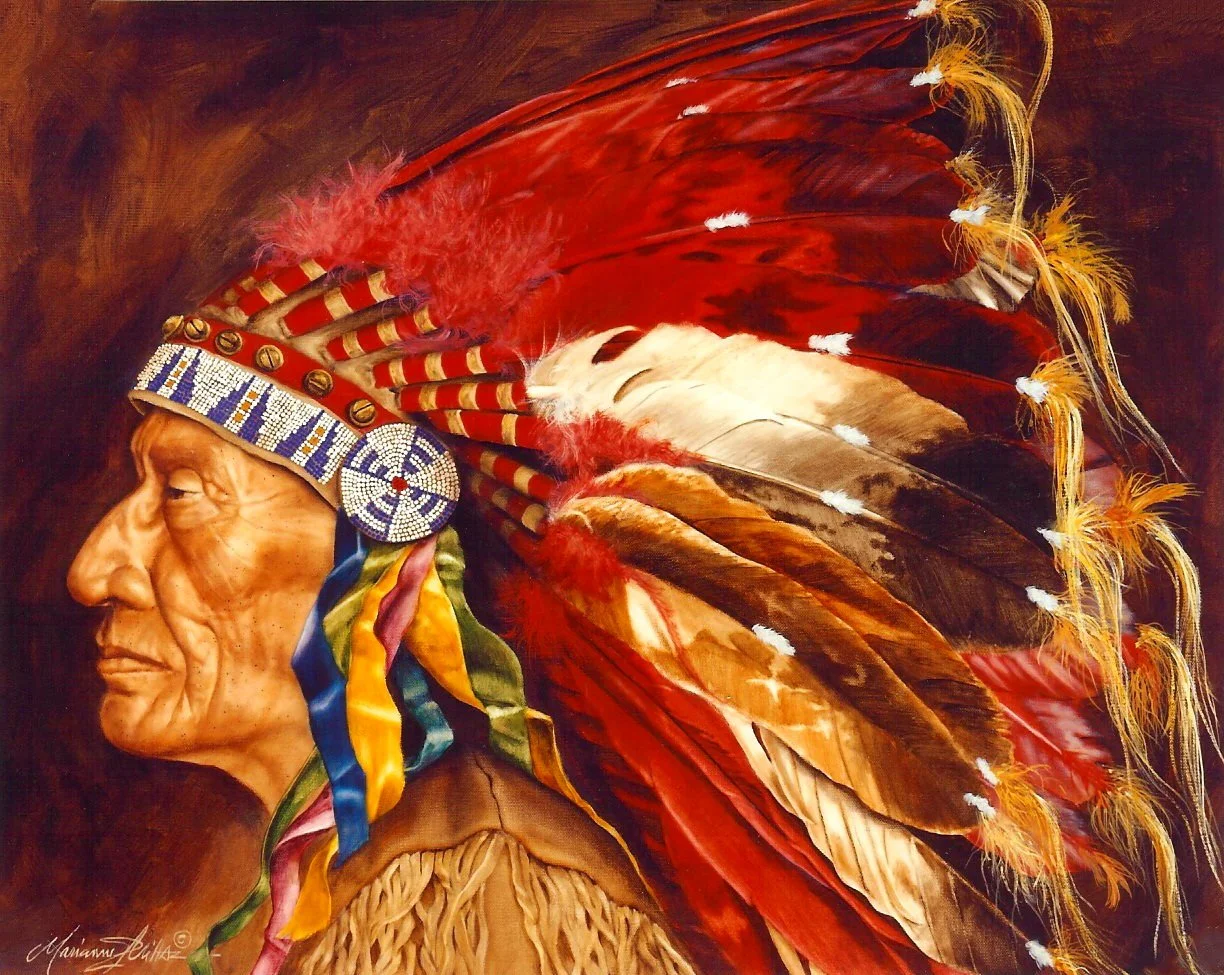
This Gros Ventre man wears one of the most iconic artifacts of the Plains Indian, the war bonnet. Often called "feathered headdresses," these bonnets were crafted from golden eagle feathers and adorned with items like eagle "breath" feathers, ermine pelts (signifying purity), and, by the late 19th century, glass trade beads and red stroud cloth.
The eagle feathers themselves, were sacred, earned items symbolizing immense bravery, honor, and spiritual protection. Only highly respected, brave men, often leaders or warriors, were permitted to wear these. Each feather represented a specific, validated, and heroic act.
Feathers were sometimes dyed or painted red to signify specific deeds, or to represent the honor and blood associated with battle. They often were a sign that a warrior has been wounded in battle, or they may have symbolized the blood shed by an enemy.
Click on Photo to view Full Image
Various Sizes - Matted Print
This Gros Ventre man wears one of the most iconic artifacts of the Plains Indian, the war bonnet. Often called "feathered headdresses," these bonnets were crafted from golden eagle feathers and adorned with items like eagle "breath" feathers, ermine pelts (signifying purity), and, by the late 19th century, glass trade beads and red stroud cloth.
The eagle feathers themselves, were sacred, earned items symbolizing immense bravery, honor, and spiritual protection. Only highly respected, brave men, often leaders or warriors, were permitted to wear these. Each feather represented a specific, validated, and heroic act.
Feathers were sometimes dyed or painted red to signify specific deeds, or to represent the honor and blood associated with battle. They often were a sign that a warrior has been wounded in battle, or they may have symbolized the blood shed by an enemy.
Click on Photo to view Full Image