 Image 1 of 1
Various Sizes - Matted Prints
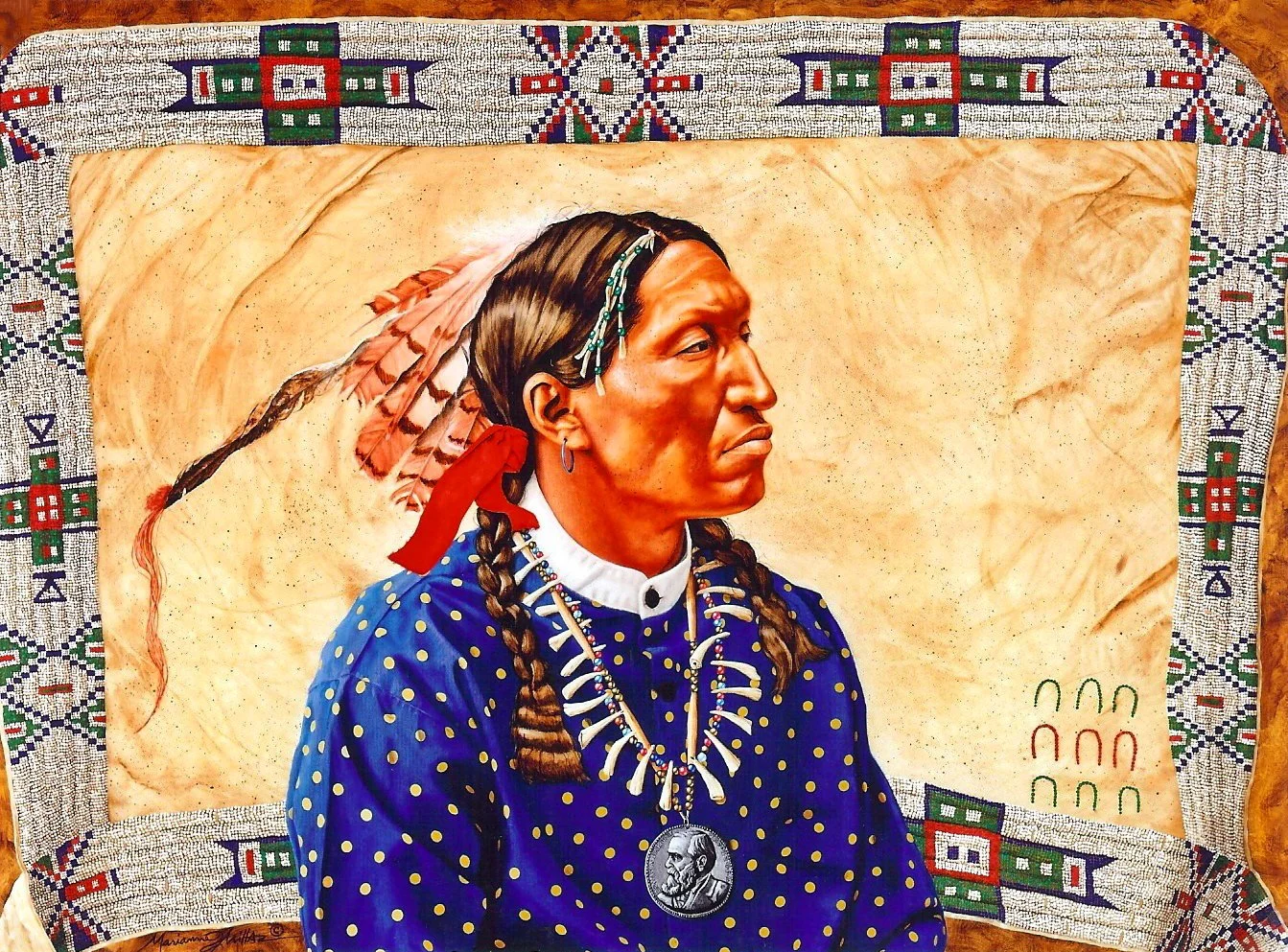
Hanging behind this Sioux warrior is a fine Lakota saddle blanket, beaded on all four sides, the corners extending out to long fringes. To the right are the beaded horse hoof prints that signify the number of successful horse raids the owner has made. The red tail feathers worn in his hair, bunched together with an achievement feather from the tail of an eagle, are from the swift flying Red-tailed Hawk. This decoration is part of the warrior's personal medicine to promote speed and agility in battle, horse raids or even in horse racing, a cherished pastime of every tribe.
In addition to the Benjamin Harrison peace medal, the unusual necklace hanging around this warrior's neck is made of glass and brass beads and horse teeth. Such a necklace could be made from an old friend who is now gone and would have great sentimental value to the owner, or it could be used as medicine. Horse tooth necklaces were sometimes worn to protect their horse from becoming lame and thus essentially could control the horse and its health. Such insurance on these prized animals is understandable as it was clear that the Plains Indians entered into a golden age of happiness and prosperity due to the horse.
Click on Photo to view Full Image
Various Sizes - Matted Prints
Hanging behind this Sioux warrior is a fine Lakota saddle blanket, beaded on all four sides, the corners extending out to long fringes. To the right are the beaded horse hoof prints that signify the number of successful horse raids the owner has made. The red tail feathers worn in his hair, bunched together with an achievement feather from the tail of an eagle, are from the swift flying Red-tailed Hawk. This decoration is part of the warrior's personal medicine to promote speed and agility in battle, horse raids or even in horse racing, a cherished pastime of every tribe.
In addition to the Benjamin Harrison peace medal, the unusual necklace hanging around this warrior's neck is made of glass and brass beads and horse teeth. Such a necklace could be made from an old friend who is now gone and would have great sentimental value to the owner, or it could be used as medicine. Horse tooth necklaces were sometimes worn to protect their horse from becoming lame and thus essentially could control the horse and its health. Such insurance on these prized animals is understandable as it was clear that the Plains Indians entered into a golden age of happiness and prosperity due to the horse.
Click on Photo to view Full Image