 Image 1 of 1
12” x 12” Matted Print
For thousands of years, the area has been continuously inhabited by Native Americans, who built settlements within the canyon and its many caves. The Pueblo people considered the Grand Canyon a holy site and made pilgrimages to it. The Paiutes called the canyon Kaibab meaning “Mountain Turned Upside Down.” Hopi mythology tells of how two brothers, Pokanghoya and Polongahoya, tossed lightning bolts and piled mud to build the Grand Canyon and the river that cuts through it. To the Navajo it is the emergence place, where the waters meet together, and where life begins. The Havasupai and Hualapai tribes both lived in and near the canyon migrating between the canyon’s inner depths and the upper plateau throughout the year and call it their home. Native Americans view the Grand Canyon through a myriad of lenses. It is a land tied to their place of origin and is the location of emergence into the world; a place to be both feared and revered; a place where spirits return to the afterlife; a place of opportunity; an inspiration for cultural expression; a locale that is their history. It holds the ruins, the shrines, the petroglyphs and the markings of their ancestral tribes and is a holy site.
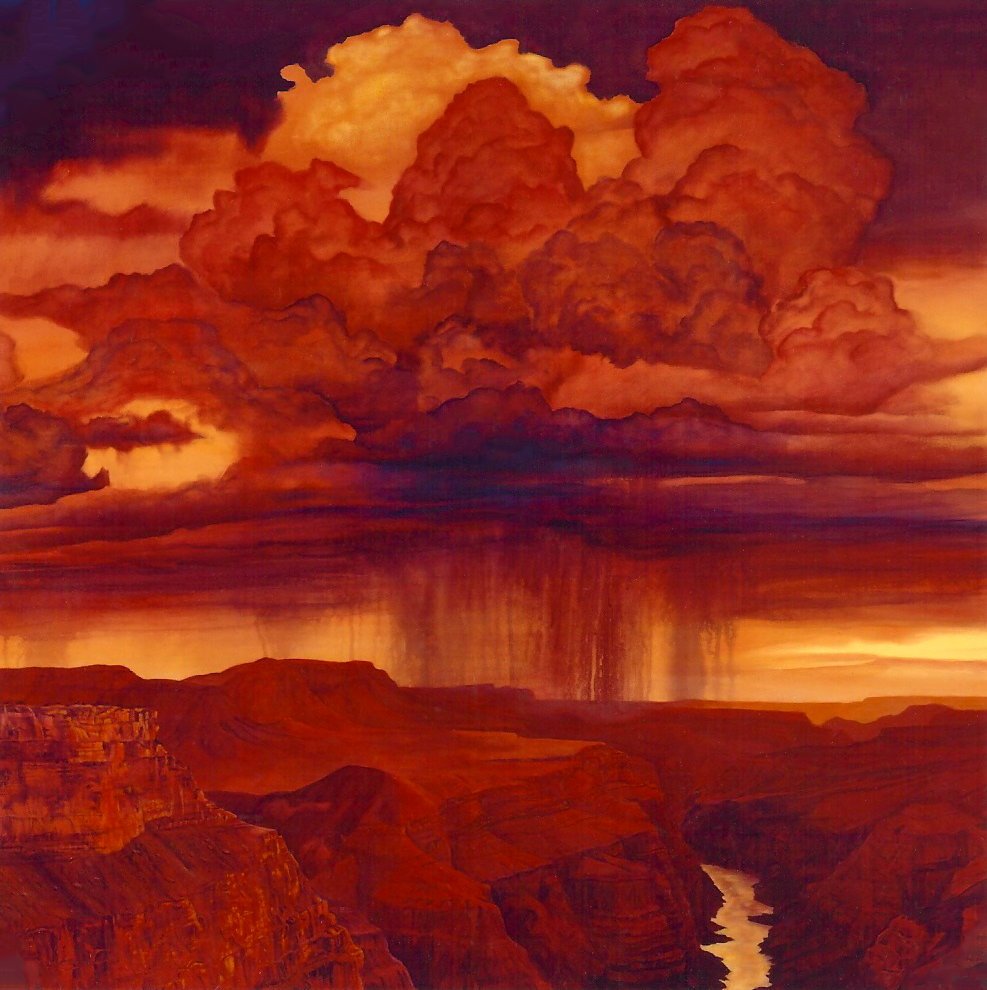
In this painting of the canyon, the gathering storm clouds promise both rain and fire as the setting sun baths them and the entire landscape in a glowing red light.
Click on Photo to view Full Image
12” x 12” Matted Print
For thousands of years, the area has been continuously inhabited by Native Americans, who built settlements within the canyon and its many caves. The Pueblo people considered the Grand Canyon a holy site and made pilgrimages to it. The Paiutes called the canyon Kaibab meaning “Mountain Turned Upside Down.” Hopi mythology tells of how two brothers, Pokanghoya and Polongahoya, tossed lightning bolts and piled mud to build the Grand Canyon and the river that cuts through it. To the Navajo it is the emergence place, where the waters meet together, and where life begins. The Havasupai and Hualapai tribes both lived in and near the canyon migrating between the canyon’s inner depths and the upper plateau throughout the year and call it their home. Native Americans view the Grand Canyon through a myriad of lenses. It is a land tied to their place of origin and is the location of emergence into the world; a place to be both feared and revered; a place where spirits return to the afterlife; a place of opportunity; an inspiration for cultural expression; a locale that is their history. It holds the ruins, the shrines, the petroglyphs and the markings of their ancestral tribes and is a holy site.
In this painting of the canyon, the gathering storm clouds promise both rain and fire as the setting sun baths them and the entire landscape in a glowing red light.
Click on Photo to view Full Image