 Image 1 of 1
12” x 12” Matted Print
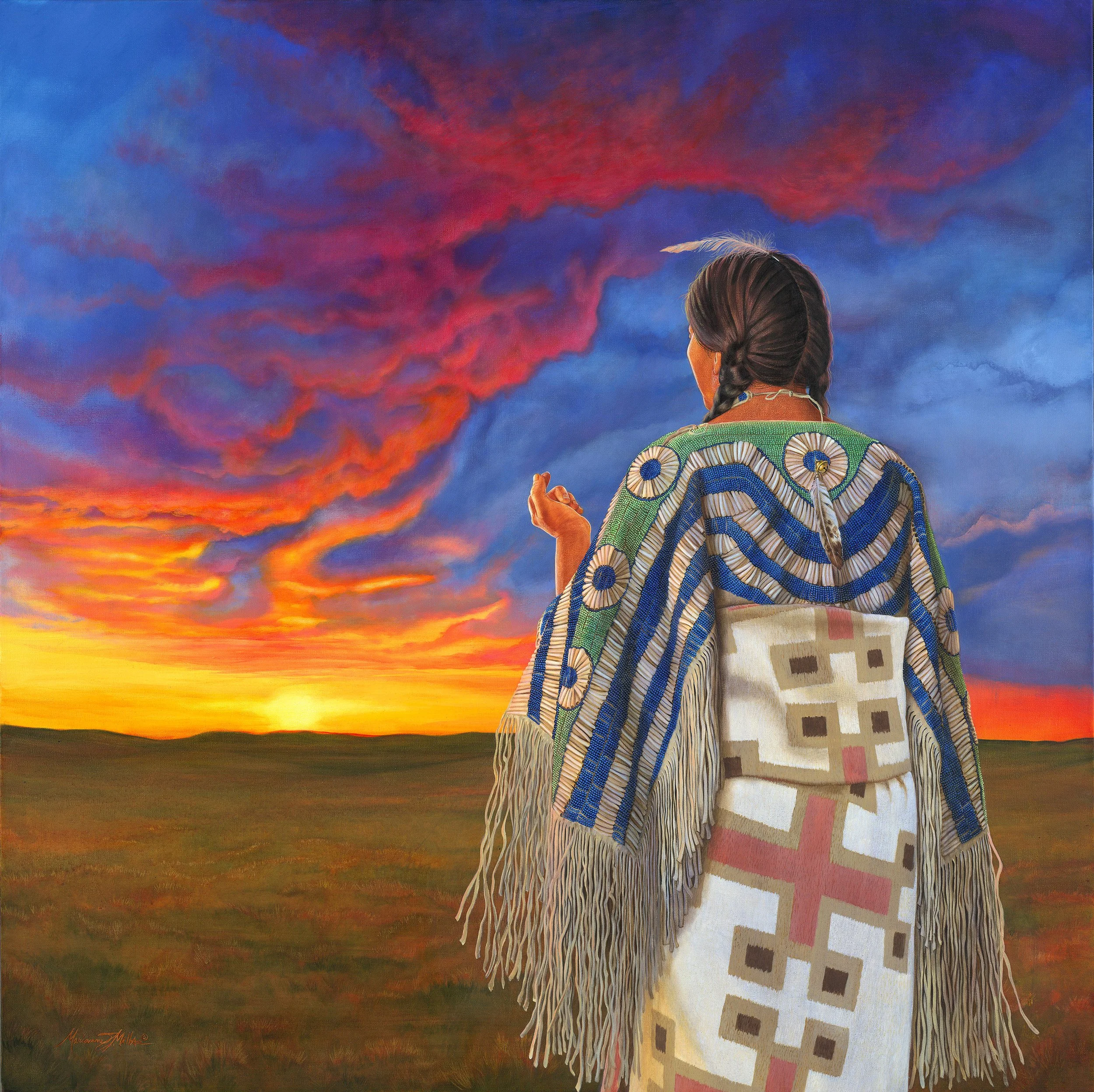
Inspired by the Native American closing prayer of the day, this Nez Perce woman dressed in her finest regalia, faces the West and the setting of the sun and gives thanks to the Creator for all of His blessings. She wears a traditional deer skin dress decorated with beads and dentalium shells and wraps herself in a Navajo trade blanket from the Southwest.
The Nez Perce people called themselves the Nimiipuu, meaning “the walking people” or “we, the people” and are an Indigenous people of the Plateau who have lived on the Columbia River Plateau in the Pacific
Northwest region of the United States for centuries. After first contact with Lewis and Clark in 1805, the name “Nez Perce” was mistakenly given to the Nimiipuu and the nearby Chinook people by French explorers and trappers. The name means “pierced nose,” but only the Chinook used that form of decoration.
Even in ancient times the Nez Perce were economically and culturally influential in trade and war, interacting with other indigenous nations in a vast trading network from the western shores of Oregon and Washington, the high plains of Montana, and the northern Great Basin in southern Idaho and northern Nevada. The Euro-Americans who encountered the Nez Perce found them a gentle, trustworthy, and noble people.
Click on Photo to view Full Image
12” x 12” Matted Print
Inspired by the Native American closing prayer of the day, this Nez Perce woman dressed in her finest regalia, faces the West and the setting of the sun and gives thanks to the Creator for all of His blessings. She wears a traditional deer skin dress decorated with beads and dentalium shells and wraps herself in a Navajo trade blanket from the Southwest.
The Nez Perce people called themselves the Nimiipuu, meaning “the walking people” or “we, the people” and are an Indigenous people of the Plateau who have lived on the Columbia River Plateau in the Pacific
Northwest region of the United States for centuries. After first contact with Lewis and Clark in 1805, the name “Nez Perce” was mistakenly given to the Nimiipuu and the nearby Chinook people by French explorers and trappers. The name means “pierced nose,” but only the Chinook used that form of decoration.
Even in ancient times the Nez Perce were economically and culturally influential in trade and war, interacting with other indigenous nations in a vast trading network from the western shores of Oregon and Washington, the high plains of Montana, and the northern Great Basin in southern Idaho and northern Nevada. The Euro-Americans who encountered the Nez Perce found them a gentle, trustworthy, and noble people.
Click on Photo to view Full Image