 Image 1 of 1
Various Sizes - Matted Prints
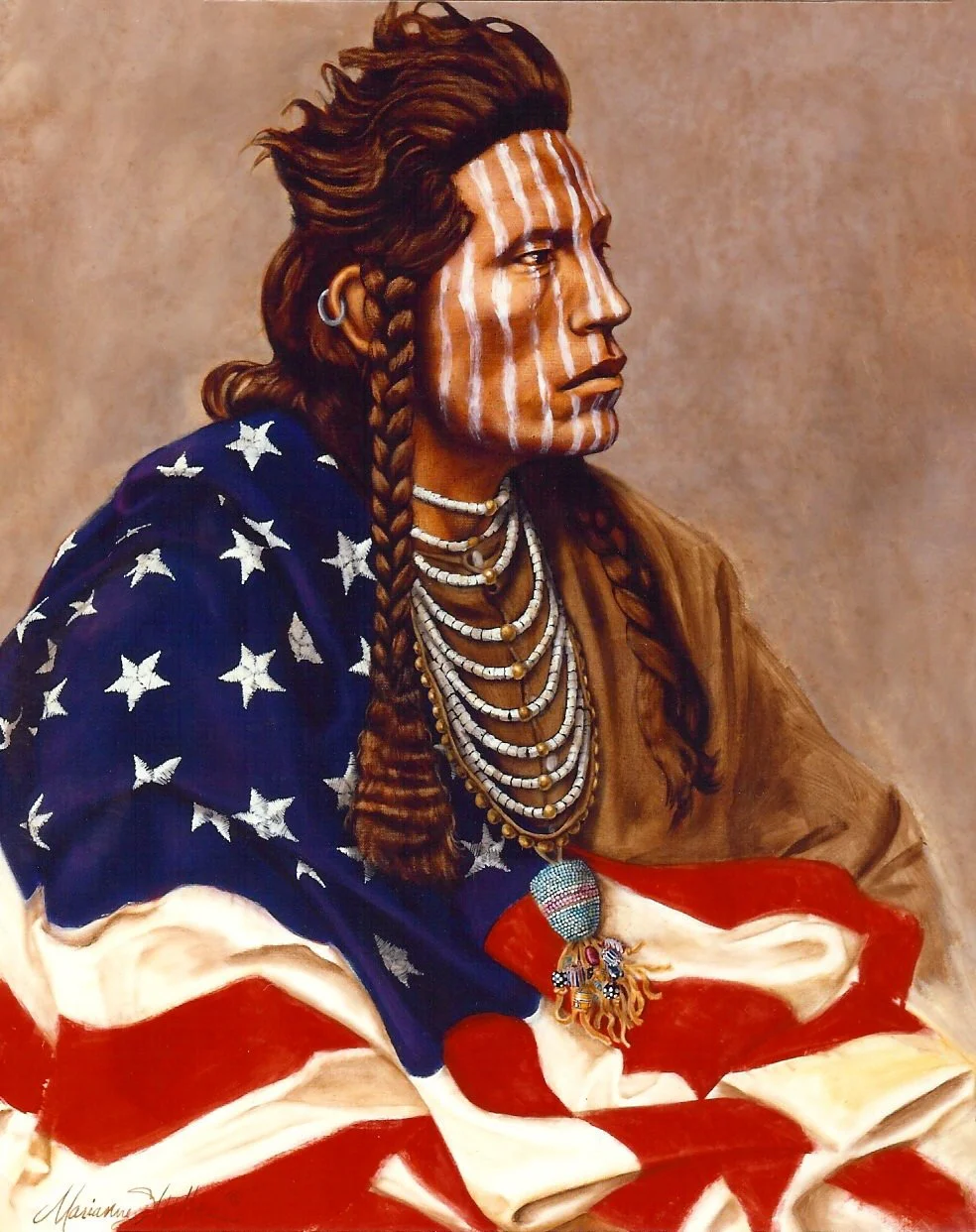
For over 100 years, the Crow Nation fought with strong tribes from every direction. Often outnumbered and constantly at war, they were gradually forced west. With the encroachment by white European settlers into their land, the Crow were faced with tough decisions about how to survive in a changing world. In the 1850s, a vision by Plenty Coups, one of their greatest chiefs, convinced the Crow that the whites would become dominant over the entire country. If the Crow were to retain any of their land, they would need to remain on good terms with the whites. Thus, the Crow nation allied itself with the United States against their native enemies during the Plains Wars of the 1850s through 1870s, and members of the Crow served as scouts for the U.S. Army during the latter 19th century.
Curley was one such scout for the US Cavalry. On one fateful day in June 1876, there were six Crow warriors who rode with George Armstrong Custer on his last march down the Little Big Horn River in Montana and Curley was one of them. After the massacre, Curley was popularly described as the "lone survivor" of the famous battle. Although it is true that he was one of the last to see Custer alive, he later admitted that he wasn't in the battle but watched it from a distance. Being one of the few survivors of the massacre he also was one of the first messengers of disaster who brought the news of Custer's last stand.
Click on Photo to view Full Image
Various Sizes - Matted Prints
For over 100 years, the Crow Nation fought with strong tribes from every direction. Often outnumbered and constantly at war, they were gradually forced west. With the encroachment by white European settlers into their land, the Crow were faced with tough decisions about how to survive in a changing world. In the 1850s, a vision by Plenty Coups, one of their greatest chiefs, convinced the Crow that the whites would become dominant over the entire country. If the Crow were to retain any of their land, they would need to remain on good terms with the whites. Thus, the Crow nation allied itself with the United States against their native enemies during the Plains Wars of the 1850s through 1870s, and members of the Crow served as scouts for the U.S. Army during the latter 19th century.
Curley was one such scout for the US Cavalry. On one fateful day in June 1876, there were six Crow warriors who rode with George Armstrong Custer on his last march down the Little Big Horn River in Montana and Curley was one of them. After the massacre, Curley was popularly described as the "lone survivor" of the famous battle. Although it is true that he was one of the last to see Custer alive, he later admitted that he wasn't in the battle but watched it from a distance. Being one of the few survivors of the massacre he also was one of the first messengers of disaster who brought the news of Custer's last stand.
Click on Photo to view Full Image