Original Paintings
18” x 30”
Acrylic on Canvas
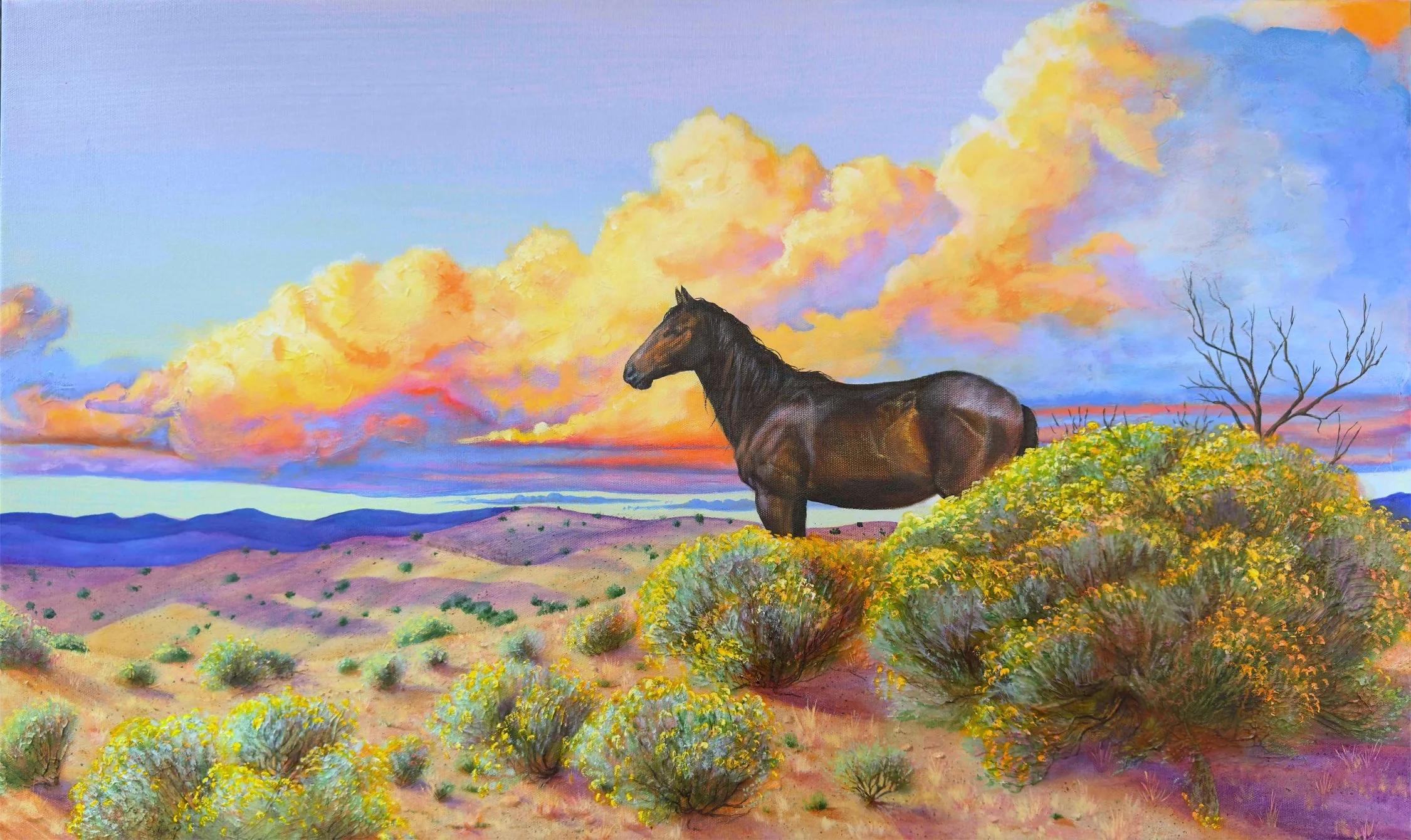
New Mexico is home to several hundred wild and free-roaming mustangs. While federally protected herds occupy designated territories, unmanaged local populations are also known to roam near residential and wilderness areas. One such herd roams the area east of Santa Fe called the Caja del Rio.
Celebrating this untamed spirit of New Mexico is a lone mustang at sunrise, surveying the surrounding beauty of the rising of the sun and the high-desert chamisa in full bloom.
Click on Photo to view Full Image
September Sunrise
18” x 30”
Acrylic on Canvas
Unframed
New Mexico is home to several hundred wild and free-roaming mustangs. While federally protected herds occupy designated territories, unmanaged local populations are also known to roam near residential and wilderness areas. One such herd roams the area east of Santa Fe called the Caja del Rio.
Celebrating this untamed spirit of New Mexico is a lone mustang at sunrise, surveying the surrounding beauty of the rising of the sun and the high-desert chamisa in full bloom.
18” x 30”
Acrylic on Canvas
New Mexico is home to several hundred wild and free-roaming mustangs. While federally protected herds occupy designated territories, unmanaged local populations are also known to roam near residential and wilderness areas. One such herd roams the area east of Santa Fe called the Caja del Rio.
Celebrating this untamed spirit of New Mexico is a lone mustang at sunrise, surveying the surrounding beauty of the rising of the sun and the high-desert chamisa in full bloom.
Click on Photo to view Full Image
$ 1500.00
20” x 30”
Acrylic on Canvas
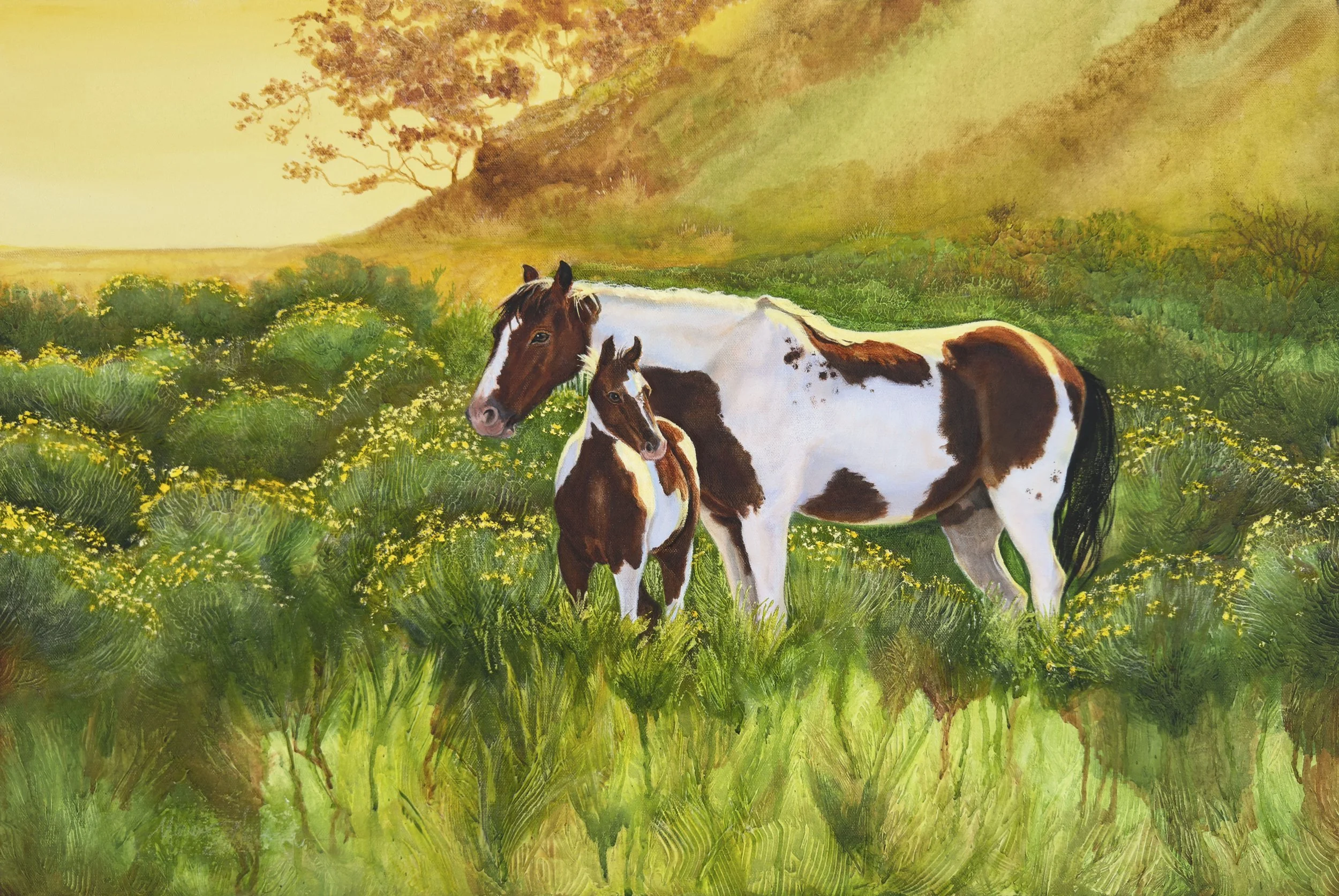
The bond between mother and child is a classic human trait but can also be seen in horses. The mare will bond with her foal through constant closeness, nuzzling, nursing, and protective care, often forming an instant connection within hours of the foal’s birth. The bond is described as lifelong, with foals rarely leaving their mother’s side and the love between them remaining palpable even as the foal grows.
In the wild, this pinto mare stays alert and grounded near her foal, acting as a quiet force of protection while the rest of the herd grazes. Her devotion doesn’t waver even as bands shift, and she guides the foal with her watchful presence in the rugged landscape.
Click on Photo to view Full Image
The Little Pinto
20” × 30”
Acrylic on Canvas
Gallery Wrapped and No Frame
The bond between mother and child is a classic human trait but can also be seen in horses. The mare will bond with her foal through constant closeness, nuzzling, nursing, and protective care, often forming an instant connection within hours of the foal’s birth. The bond is described as lifelong, with foals rarely leaving their mother’s side and the love between them remaining palpable even as the foal grows.
In the wild, this pinto mare stays alert and grounded near her foal, acting as a quiet force of protection while the rest of the herd grazes. Her devotion doesn’t waver even as bands shift, and she guides the foal with her watchful presence in the rugged landscape.
$2200.00
20” x 30”
Acrylic on Canvas
The bond between mother and child is a classic human trait but can also be seen in horses. The mare will bond with her foal through constant closeness, nuzzling, nursing, and protective care, often forming an instant connection within hours of the foal’s birth. The bond is described as lifelong, with foals rarely leaving their mother’s side and the love between them remaining palpable even as the foal grows.
In the wild, this pinto mare stays alert and grounded near her foal, acting as a quiet force of protection while the rest of the herd grazes. Her devotion doesn’t waver even as bands shift, and she guides the foal with her watchful presence in the rugged landscape.
Click on Photo to view Full Image
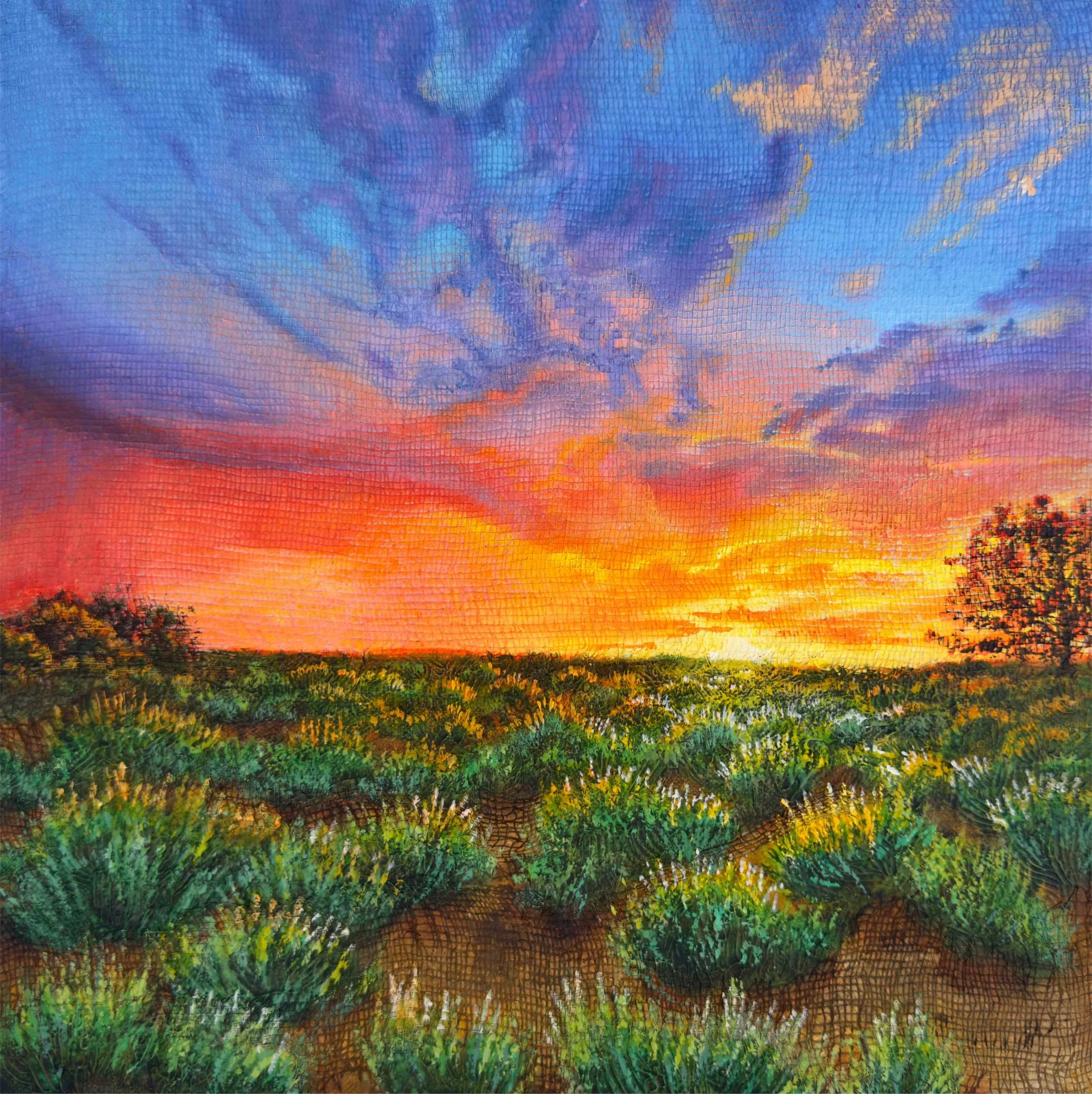
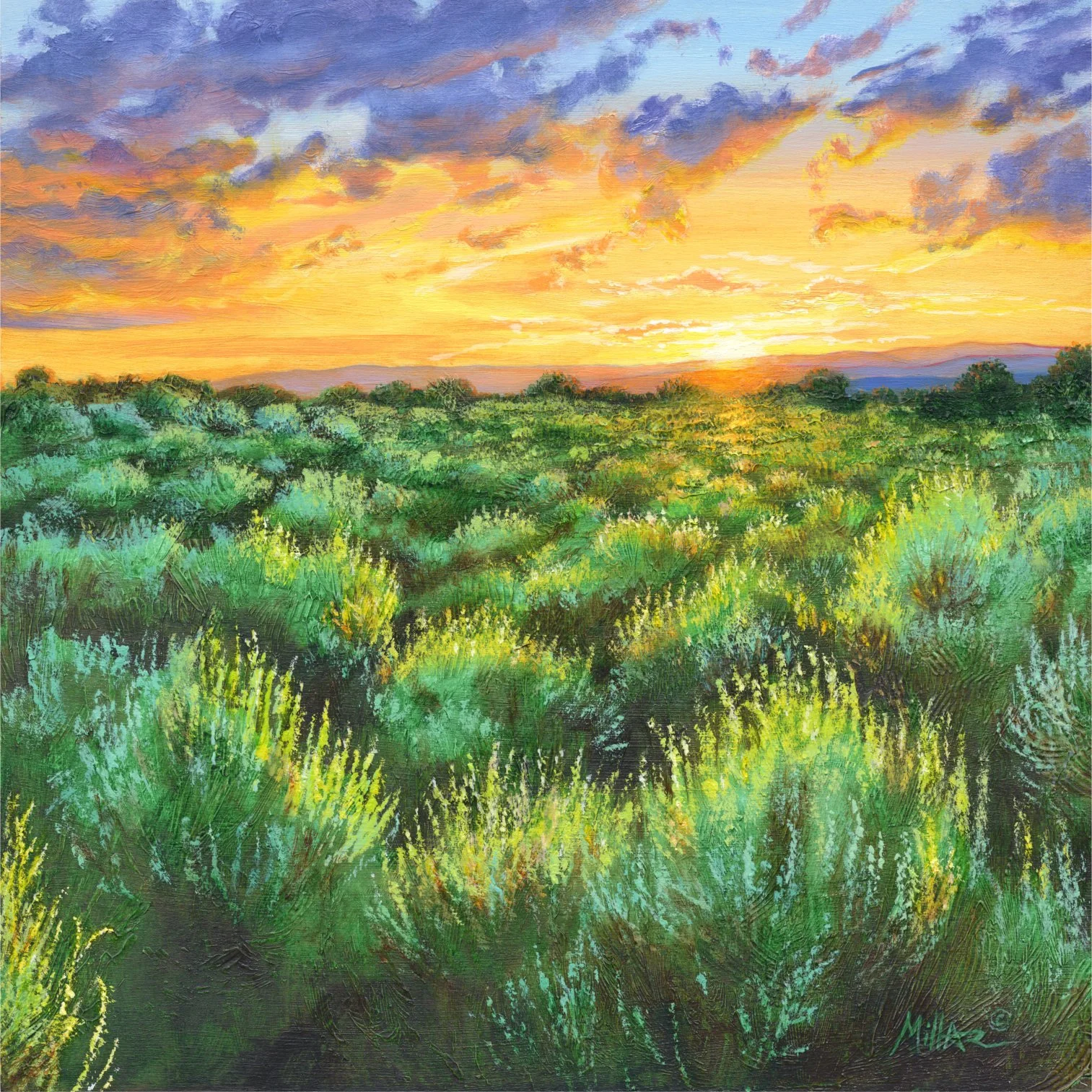
Sunsets in New Mexico can be amazingly beautiful and when I notice an orange glow outside of my windows in the early evening, I grab my camera and head outside! This particular sunset was captured right outside of my home and I added the ubiquitous chamisa bushes and the lone tree, a typical sight in New Mexico.
Santa Fe has such dramatic sunsets due to the combination of high altitude, low humidity, and clean, dry desert air, which minimizes light scattering and allows for brilliant, vibrant colors and creates a dramatic, palette of deep oranges, reds, and purples.
Sunset in Santa Fe
12” x 12”
Acrylic on Linen Panel
Framed in 3” Gold Frame
Sunsets in New Mexico can be amazingly beautiful and when I notice an orange glow outside of my windows in the early evening, I grab my camera and head outside! This particular sunset was captured right outside of my home and I added the ubiquitous chamisa bushes and the lone tree, a typical sight in New Mexico.
Santa Fe has such dramatic sunsets due to the combination of high altitude, low humidity, and clean, dry desert air, which minimizes light scattering and allows for brilliant, vibrant colors and creates a dramatic, palette of deep oranges, reds, and purples.
$650.00
Sunsets in New Mexico can be amazingly beautiful and when I notice an orange glow outside of my windows in the early evening, I grab my camera and head outside! This particular sunset was captured right outside of my home and I added the ubiquitous chamisa bushes and the lone tree, a typical sight in New Mexico.
Santa Fe has such dramatic sunsets due to the combination of high altitude, low humidity, and clean, dry desert air, which minimizes light scattering and allows for brilliant, vibrant colors and creates a dramatic, palette of deep oranges, reds, and purples.
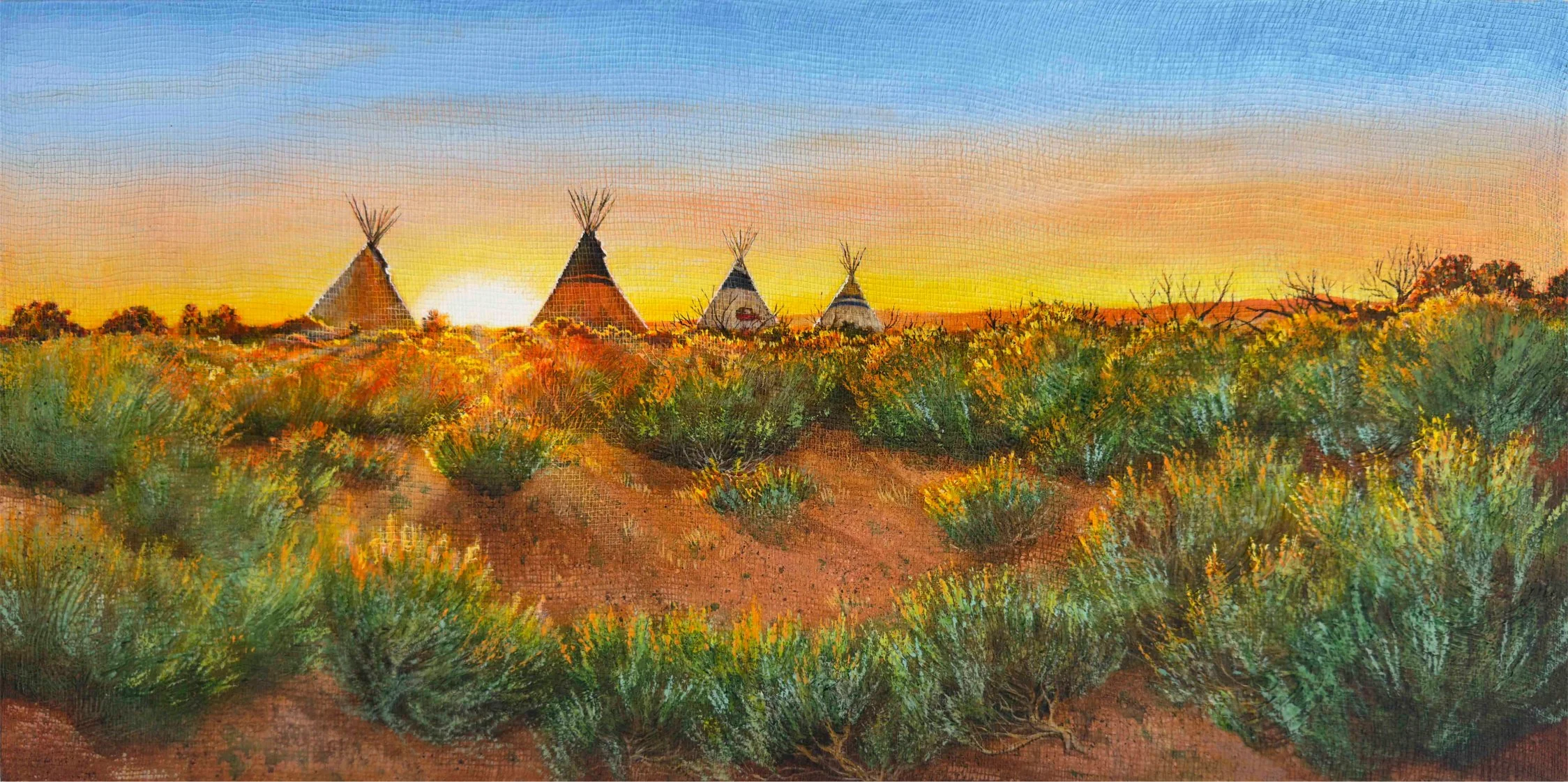
12” x 24” Original Acrylic painting on canvas
The Taos Tipis are an iconic stand of tipis that greet the visitor as they enter the town of Taos, New Mexico. The historic town of Taos is a vibrant high-desert town in the Sangre de Cristo Mountains, renowned for its rich artistic heritage, centuries-old Native American culture, and dramatic natural landscapes.
This painting is from a view of the tipis as friends and I left Taos one evening on the trip back down to Santa Fe.
Click on Photo to view Full Image
The Taos Tipis
12” x 24”
Acrylic on Canvas
UnFramed
The Taos Tipis are an iconic stand of tipis that greet the visitor as they enter the town of Taos, New Mexico. The historic town of Taos is a vibrant high-desert town in the Sangre de Cristo Mountains, renowned for its rich artistic heritage, centuries-old Native American culture, and dramatic natural landscapes.
This painting is from a view of the tipis as friends and I left Taos one evening on the trip back down to Santa Fe.
12” x 24” Original Acrylic painting on canvas
The Taos Tipis are an iconic stand of tipis that greet the visitor as they enter the town of Taos, New Mexico. The historic town of Taos is a vibrant high-desert town in the Sangre de Cristo Mountains, renowned for its rich artistic heritage, centuries-old Native American culture, and dramatic natural landscapes.
This painting is from a view of the tipis as friends and I left Taos one evening on the trip back down to Santa Fe.
Click on Photo to view Full Image
$900.00
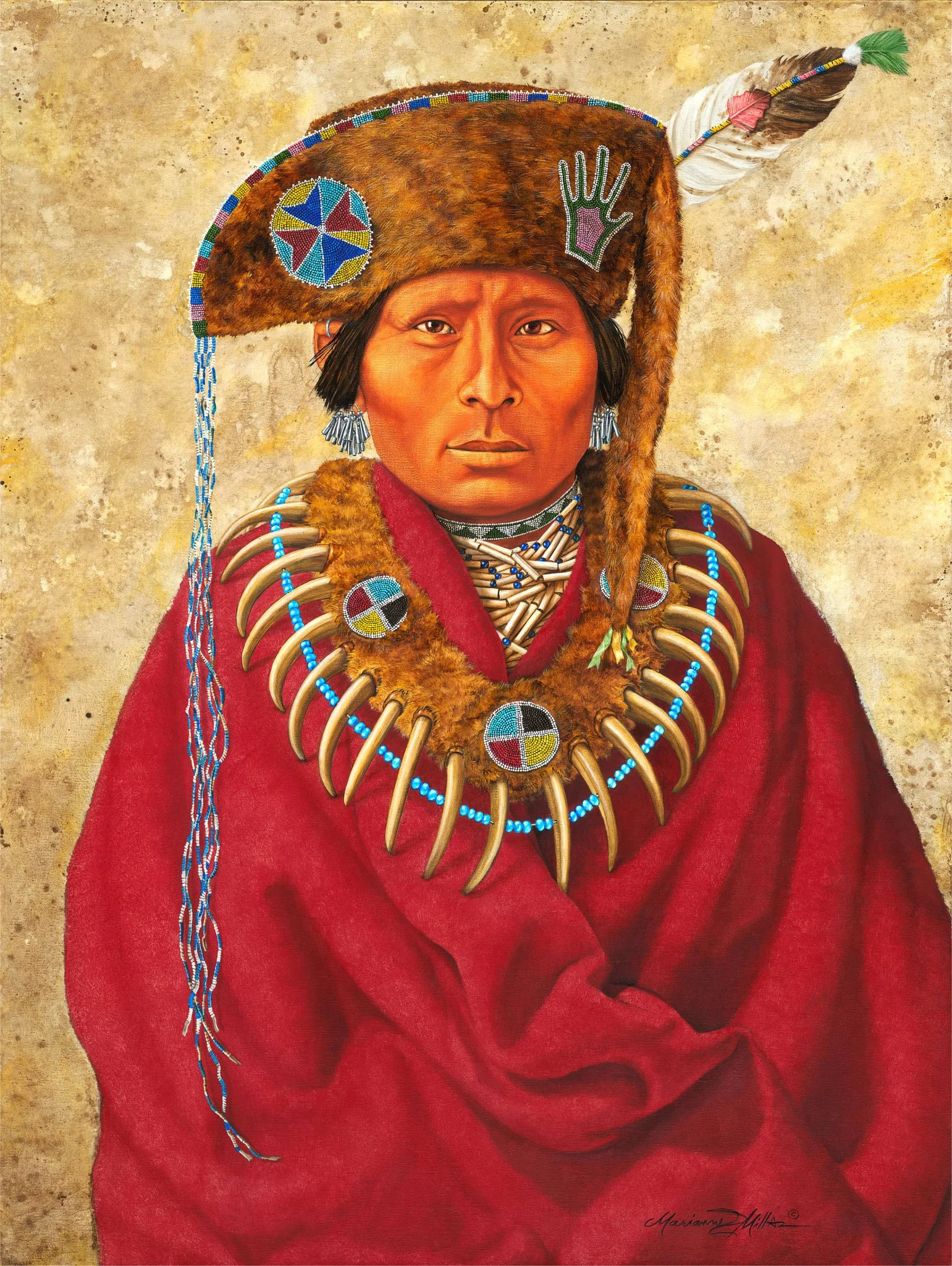
40” x 30” Acrylic on Canvas
At one time, the Otoes and Missourias, along with the Winnebago and Iowa Tribes, were once part of a single tribe that lived in the Great Lakes Region of the United States. In the 16th century, the Iowa, Otoe, and Missouria broke away from that tribe and moved to the south and west. Eventually the Otoe moved to the general area of Nebraska, Iowa, Missouri and Kansas and became known as one of the Prairie tribes along with the Missouria, Omaha, Iowa, Osage, Quapaw and Ponca tribes.
This Otoe man wears two important pieces of ceremonial clothing, distinctive among the Western Great Lakes and Prairie cultures, the otter skin turban and the grizzly bear claw necklace.
Prairie men commonly wore open-top turbans of various animal pelts, including otter, beaver, cougar, fox, skunk, and wolf. Otter was universally prized, not only for the beauty of its fur, but also for philosophical reasons. Indians observed that this charismatic creature occupied itself both in water and on land, and therefore deemed it to be a liaison between aquatic and land beings.
When worn, in characteristic fashion, the head end of the pelt is oriented clockwise around the wearer’s head. Native peoples considered this direction as “sunwise”–the path the sun takes as it daily courses its way across the sky. A fully beaded medallion and beaded human hand decorate the front of the turban. There are at least two explanations that can be offered for the use of hand symbolism among the Prairie tribes. The first version declares that the wearer had killed an enemy in hand-to-hand combat. The second suggests the presence or blessings of Wah-kon-tah, the Great Spirit, and represents the open hand of God.
The grizzly bear claw necklace was an ornament that represented high esteem and accomplishment for senior men of the prairie tribes. Grizzly bears had once roamed the river valleys of the prairies west of the Mississippi. Their claws grew to exceptional length in this grassy environment. Now that the range of the grizzly bear has shrunk to the rocky, mountainous regions of the west, their claws are much shorter. Prairie men used only four claws from each forepaw of the grizzly, so that four grizzly bears, at least, contributed to the over 30 claws used for this necklace. Otter fur is wrapped around the necklace and an entire otter pelt is used to create a long, narrow “tail” or “drop” that hangs off the back of the necklace. Large spherical glass beads made in Venice and acquired from traders were used as spacers between the claws. Three large pendants representing the cardinal directions decorate the front of the necklace.
The Otoe
40” x 30”
Acrylic on Canvas
At one time, the Otoes and Missourias, along with the Winnebago and Iowa Tribes, were once part of a single tribe that lived in the Great Lakes Region of the United States. In the 16th century, the Iowa, Otoe, and Missouria broke away from that tribe and moved to the south and west. Eventually the Otoe moved to the general area of Nebraska, Iowa, Missouri and Kansas and became known as one of the Prairie tribes along with the Missouria, Omaha, Iowa, Osage, Quapaw and Ponca tribes.
This Otoe man wears two important pieces of ceremonial clothing, distinctive among the Western Great Lakes and Prairie cultures, the otter skin turban and the grizzly bear claw necklace.
Prairie men commonly wore open-top turbans of various animal pelts, including otter, beaver, cougar, fox, skunk, and wolf. Otter was universally prized, not only for the beauty of its fur, but also for philosophical reasons. Indians observed that this charismatic creature occupied itself both in water and on land, and therefore deemed it to be a liaison between aquatic and land beings.
When worn, in characteristic fashion, the head end of the pelt is oriented clockwise around the wearer’s head. Native peoples considered this direction as “sunwise”–the path the sun takes as it daily courses its way across the sky. A fully beaded medallion and beaded human hand decorate the front of the turban. There are at least two explanations that can be offered for the use of hand symbolism among the Prairie tribes. The first version declares that the wearer had killed an enemy in hand-to-hand combat. The second suggests the presence or blessings of Wah-kon-tah, the Great Spirit, and represents the open hand of God.
The grizzly bear claw necklace was an ornament that represented high esteem and accomplishment for senior men of the prairie tribes. Grizzly bears had once roamed the river valleys of the prairies west of the Mississippi. Their claws grew to exceptional length in this grassy environment. Now that the range of the grizzly bear has shrunk to the rocky, mountainous regions of the west, their claws are much shorter. Prairie men used only four claws from each forepaw of the grizzly, so that four grizzly bears, at least, contributed to the over 30 claws used for this necklace. Otter fur is wrapped around the necklace and an entire otter pelt is used to create a long, narrow “tail” or “drop” that hangs off the back of the necklace. Large spherical glass beads made in Venice and acquired from traders were used as spacers between the claws. Three large pendants representing the cardinal directions decorate the front of the necklace.
$ 4250.00
40” x 30” Acrylic on Canvas
At one time, the Otoes and Missourias, along with the Winnebago and Iowa Tribes, were once part of a single tribe that lived in the Great Lakes Region of the United States. In the 16th century, the Iowa, Otoe, and Missouria broke away from that tribe and moved to the south and west. Eventually the Otoe moved to the general area of Nebraska, Iowa, Missouri and Kansas and became known as one of the Prairie tribes along with the Missouria, Omaha, Iowa, Osage, Quapaw and Ponca tribes.
This Otoe man wears two important pieces of ceremonial clothing, distinctive among the Western Great Lakes and Prairie cultures, the otter skin turban and the grizzly bear claw necklace.
Prairie men commonly wore open-top turbans of various animal pelts, including otter, beaver, cougar, fox, skunk, and wolf. Otter was universally prized, not only for the beauty of its fur, but also for philosophical reasons. Indians observed that this charismatic creature occupied itself both in water and on land, and therefore deemed it to be a liaison between aquatic and land beings.
When worn, in characteristic fashion, the head end of the pelt is oriented clockwise around the wearer’s head. Native peoples considered this direction as “sunwise”–the path the sun takes as it daily courses its way across the sky. A fully beaded medallion and beaded human hand decorate the front of the turban. There are at least two explanations that can be offered for the use of hand symbolism among the Prairie tribes. The first version declares that the wearer had killed an enemy in hand-to-hand combat. The second suggests the presence or blessings of Wah-kon-tah, the Great Spirit, and represents the open hand of God.
The grizzly bear claw necklace was an ornament that represented high esteem and accomplishment for senior men of the prairie tribes. Grizzly bears had once roamed the river valleys of the prairies west of the Mississippi. Their claws grew to exceptional length in this grassy environment. Now that the range of the grizzly bear has shrunk to the rocky, mountainous regions of the west, their claws are much shorter. Prairie men used only four claws from each forepaw of the grizzly, so that four grizzly bears, at least, contributed to the over 30 claws used for this necklace. Otter fur is wrapped around the necklace and an entire otter pelt is used to create a long, narrow “tail” or “drop” that hangs off the back of the necklace. Large spherical glass beads made in Venice and acquired from traders were used as spacers between the claws. Three large pendants representing the cardinal directions decorate the front of the necklace.