 Image 1 of 1
Click on Photo to view Full Image
*Oversized Limited Edition Prints are only available unstretched for shipping. For local pickup or delivery please contact Marianne for oversized stretching prices.
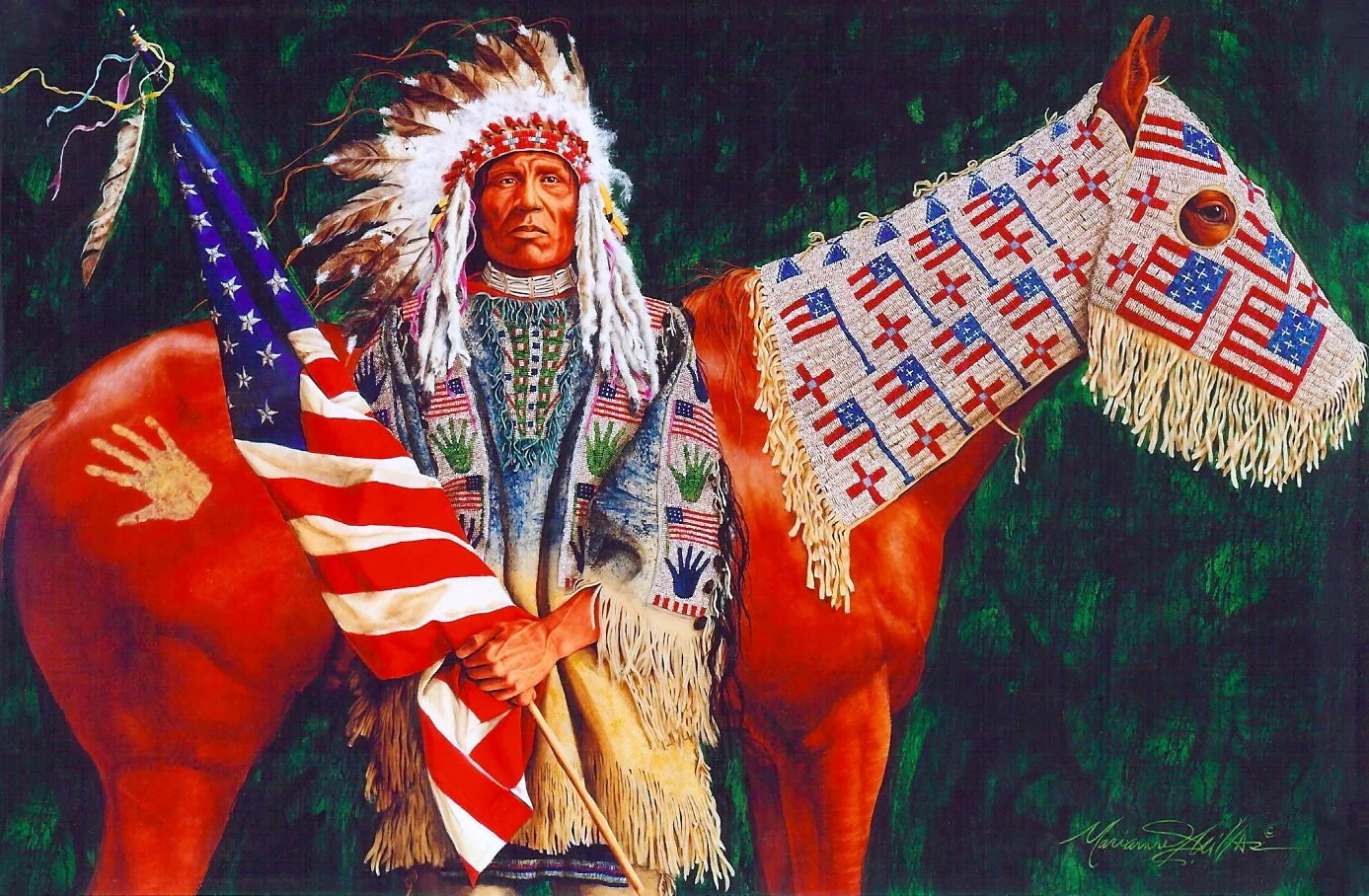
To the Lakota, or Western Sioux, the American flag held many complex meanings and uses. Being the greatest producers of “flag art” during the late 1800’s-early 1900’s, the Lakota show the often tenuous and ambivalent relationship that developed between the U.S. and their once sovereign nation. During this reservation period many Sioux traditional ceremonials and dances were banned in an inept attempt to assimilate native peoples into the American culture. One celebration however, that was not only allowed but encouraged, was the Fourth of July celebration. These Fourth of July jubilees were one of a few times when some banned traditional religious practices were tolerated, and became a blending of old and new. Lasting as long as six days, these celebrations included traditional dances, parades, feasting, “Giveaways,” and mock battles between full-blooded Sioux versus mixed bloods and Indian Police. Yet, they also encompassed white contests and activities such as speeches, tug-of-war, potato races, and the reading of the Declaration of Independence.
For the Lakota, the Fourth of July became one of the times that they could return to their native ways and as such, the Fourth and its symbol, the American flag, became well respected parts of their life and culture. The more they participated in these types of celebrations that embraced white culture and white symbols, the more these practices were sanctioned by white government.
Enjoy the look of the original painting with hand embellished, painted “beads” highlighting the horse mask, war shirt, and headdress. Incredibly detailed, textured beads are hand painted by the artist and finished with a gloss varnish that gives them a glass bead look. The technique used by the artist gives the look and feel of actual seed beads. Can only be added to the 40 x 60 inch and 48 x 72 inch prints for an additional $3000. Please contact Marianne with any questions.
Click on Photo to view Full Image
*Oversized Limited Edition Prints are only available unstretched for shipping. For local pickup or delivery please contact Marianne for oversized stretching prices.
To the Lakota, or Western Sioux, the American flag held many complex meanings and uses. Being the greatest producers of “flag art” during the late 1800’s-early 1900’s, the Lakota show the often tenuous and ambivalent relationship that developed between the U.S. and their once sovereign nation. During this reservation period many Sioux traditional ceremonials and dances were banned in an inept attempt to assimilate native peoples into the American culture. One celebration however, that was not only allowed but encouraged, was the Fourth of July celebration. These Fourth of July jubilees were one of a few times when some banned traditional religious practices were tolerated, and became a blending of old and new. Lasting as long as six days, these celebrations included traditional dances, parades, feasting, “Giveaways,” and mock battles between full-blooded Sioux versus mixed bloods and Indian Police. Yet, they also encompassed white contests and activities such as speeches, tug-of-war, potato races, and the reading of the Declaration of Independence.
For the Lakota, the Fourth of July became one of the times that they could return to their native ways and as such, the Fourth and its symbol, the American flag, became well respected parts of their life and culture. The more they participated in these types of celebrations that embraced white culture and white symbols, the more these practices were sanctioned by white government.
Enjoy the look of the original painting with hand embellished, painted “beads” highlighting the horse mask, war shirt, and headdress. Incredibly detailed, textured beads are hand painted by the artist and finished with a gloss varnish that gives them a glass bead look. The technique used by the artist gives the look and feel of actual seed beads. Can only be added to the 40 x 60 inch and 48 x 72 inch prints for an additional $3000. Please contact Marianne with any questions.